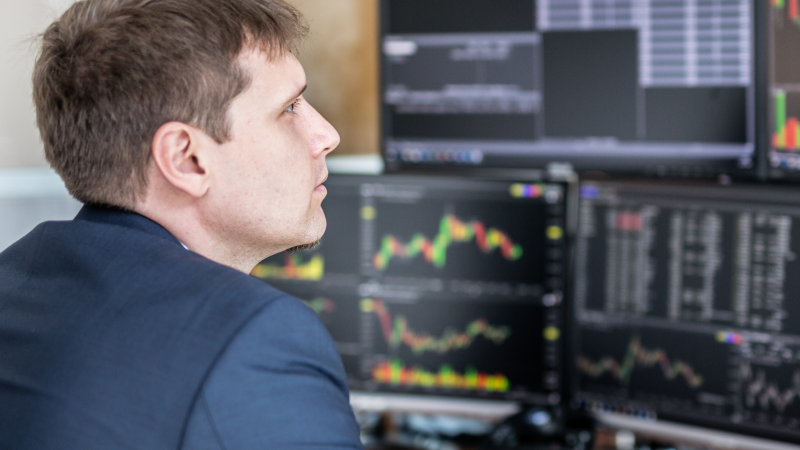
AI in energy trading: 2025 and beyond
In the fast-paced world of energy trading, few forces are reshaping the landscape as dramatically as artificial intelligence (AI). Just a year ago, we were talking about the rise of machine learning models and smarter forecasting tools. Now? We’re in a new phase entirely — where AI is no longer just supporting decision-making but starting to act on it.
Welcome to the era of agentic AI, where systems don’t just analyse data — they proactively take action, make recommendations, and even manage portfolios. And for energy trading firms, this opens up a whole new frontier of opportunity — and challenge.
From HFT to autonomous trading agents
We’ve already seen energy trading desks borrowing high-frequency trading (HFT) techniques from financial markets to eke out alpha in volatile gas and power markets. But now, we’re seeing the next evolution: agentic AI systems that can operate semi-autonomously.
These aren’t just algorithmic trading bots. They’re AI agents capable of simulating multiple trading strategies, learning from outcomes in real time, and adapting based on broader market signals — not just price data, but geopolitical updates, weather anomalies, and even regulatory shifts. Some hedge funds and trading houses are already experimenting with these systems to manage smaller portfolios or test risk exposure across various scenarios.
Expect the next 12 months to bring more experimentation here, especially as open-source frameworks and commercial platforms make agentic AI more accessible.
AI’s infrastructure demands are still growing
AI’s hunger for energy continues to rise, especially with the training and deployment of large models across trading infrastructure. Energy trading firms adopting AI at scale are rethinking their data infrastructure — with a focus on edge computing, real-time data ingestion, and low-latency cloud platforms.
Interestingly, some firms are now partnering directly with renewable energy providers to offset the growing demand from AI systems — a sustainability play that also offers trading opportunities in green energy markets.
Forecasting is becoming hyper-accurate thanks to foundation models
The biggest leap in the past year? AI-powered forecasting. Foundation models like OpenAI’s GPT or Google’s Gemini have been adapted to integrate real-time weather, grid, and commodity market data, delivering hyper-local, multi-factor forecasts.
This is enabling traders to better optimise storage, plan around renewable intermittency, and price contracts with greater confidence. Some firms are also using AI for stress-testing — running extreme-but-plausible market scenarios based on synthetic event data.
Governance, compliance and the risk of overreach
With great power comes… well, a compliance headache.
As AI becomes more embedded in trading operations — especially with agentic systems that can execute decisions — the risks multiply. Model drift, biased outcomes, lack of explainability, and the potential for AI to behave in unexpected ways are all real concerns. These aren’t just theoretical risks; regulators are watching closely.
In the UK and EU, emerging guidance is pushing for:
- Explainability and auditability: Firms must be able to demonstrate how AI-driven decisions are made.
- Accountability frameworks: Human oversight remains mandatory — you can’t delegate responsibility to a model.
- Model governance: A growing expectation that firms maintain a clear register of their AI systems, with documented testing, version control, and regular performance audits.
For trading firms, that means working closely with legal, compliance, and risk teams to build robust AI governance frameworks from day one. It’s not just about avoiding fines — it’s about building trust in AI-augmented decisions both internally and externally.
Cybersecurity is facing bigger threats and smarter defences
As AI systems become more agentic and integrated into core trading workflows, they become higher-value targets. Attacks are getting smarter too — including AI-generated phishing and automated exploits aimed at disrupting trading systems.
The response? A new generation of AI-powered cybersecurity tools that learn and adapt just like the threats they face. But human oversight is still critical — and it’s becoming a strategic advantage to have cyber-aware talent on trading and infrastructure teams.
The rise of the AI-first quant
The energy sector’s talent gap in AI hasn’t gone away — in fact, it’s widening. But the nature of in-demand skills is changing.
Here’s what’s rising to the top:
- AI literacy for traders: Not every trader needs to code, but understanding how AI works — its capabilities and limitations — is becoming a core competency.
- Prompt engineering & agent orchestration: With the rise of agentic systems, knowing how to direct AI agents through prompt frameworks and logic chains is fast becoming a hot skill.
- Data engineering & real-time analytics: Traders and quants who can build scalable, low-latency pipelines for high-volume data will remain in high demand.
- Model oversight & explainability: As more decisions are made (or suggested) by AI, there’s increasing regulatory and operational pressure to understand and explain how those decisions were reached.
What’s next in the year ahead
Over the next 12 months, we expect to see:
- Wider adoption of agentic AI in risk modelling and trade execution.
- More partnerships between trading firms and AI startups, particularly around LLM fine-tuning.
- Increased regulatory scrutiny over how AI is used in trading — especially where decision-making is semi-autonomous.
- A growing arms race in talent, not just for pure AI experts, but for those who can sit at the intersection of trading intuition and technical capability.
Final thoughts
AI has moved from being a tool to being a partner in the trading process. For those in energy markets, the next chapter isn’t just about keeping up — it’s about actively shaping how this technology is applied, safely and strategically.
If you’re a hiring manager looking to future-proof your team with AI-savvy talent — or you’re a trader, quant or data scientist exploring what’s next — let’s talk.